
Custom embossed spirits bottles: Mold process, costs, and standards
Date: August 6, 2026 Categories: Packaging Guides Views: 237
Custom glass bottle molds require upfront tooling investment, but glass remains the container material of choice for premium spirits like whiskey, rum, and tequila. According to the U.S. Environmental Protection Agency (EPA), glass is 100% infinitely recyclable and preserves product quality indefinitely. Registering structural bottle designs through the World Intellectual Property Organization (WIPO) also protects brands against copycats.
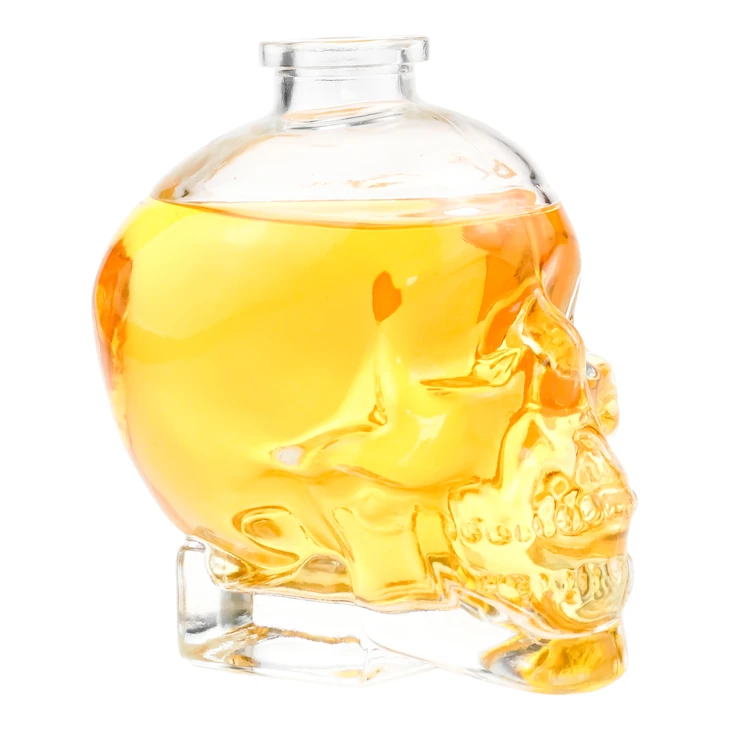
| Factor | Business impact |
|---|---|
| 100% Recyclable (EPA source) | Aligns with corporate ESG goals and appeals to eco-conscious buyers. |
| Tactile engagement | Raised logos increase consumer handling and shelf interaction. |
| Anti-counterfeiting | Custom molds are harder and costlier to replicate than printed labels. |
Comparing decoration methods
| Feature | Embossed (custom mold) | Silk screen printing | Decal |
|---|---|---|---|
| Visual effect | Integrated 3D glass relief | Bright, flat colors | Multi-color gradients |
| Durability | Permanent (bottle structure) | High (baked on) | High |
| Initial tooling | Mold setup fee | Screen fee per color | Decal plate fee |
| Unit cost | Lowest in high-volume production | Medium | Higher (manual application) |
Custom bottle mold process
- Technical drawing: Engineers translate concept sketches into 2D and 3D blueprints, calculating glass weight, fill capacity, and neck finish specifications (such as GPI threads or cork finishes).
- 3D acrylic mockup: Physical 3D prints test ergonomics and label placement before cutting steel molds.
- Sample mold production: A pilot mold produces 10 to 20 flint glass samples to verify embossing clarity and depth.
- Mass production mold: CNC machinery cuts full mold sets for the Individual Section (IS) production line.
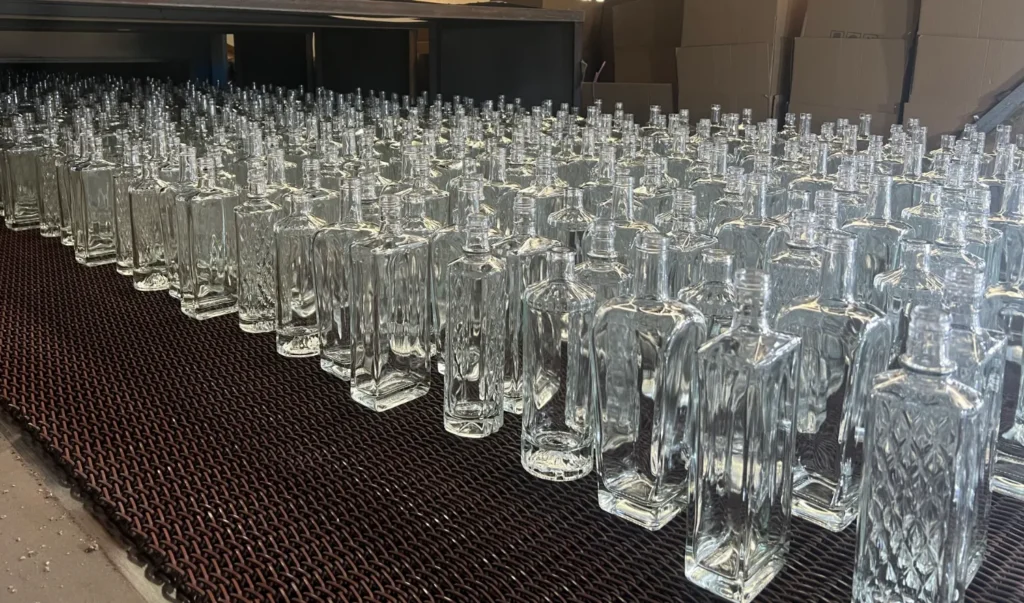
- Production and annealing: Bottles are formed on the IS line and passed through an annealing lehr to eliminate internal glass stress.
Quality control and shipping standards
Under U.S. Food and Drug Administration (FDA) regulations, glass is classified as Generally Recognized As Safe (GRAS) and does not leach chemicals into liquor.
Valiant Glass operates under ISO 9001 quality management standards. Laboratory testing includes thermal shock and internal pressure tests based on ASTM standards to confirm bottle performance on automated filling lines. Export shipments use heavy-duty double-corrugated cartons with dividers or automated pallets with shrink wrap and edge protectors to prevent transit damage.
Frequently asked questions
Q: What is the minimum order quantity (MOQ) for custom molds?
A: Typically 12,000 to 20,000 units, depending on bottle capacity and glass weight.
Q: How much does a custom glass bottle mold cost?
A: Sample molds cost $500 to $800; full production mold sets cost $1,500 to $3,000. Tooling fees are refunded once cumulative order volumes reach a specified threshold.
Q: Can logos be embossed on the bottom of the bottle?
A: Yes. Bottom embossing (punting marks) provides brand identification without cluttering front label space.
Q: How deep can glass embossing be?
A: Relief depth ranges from 0.5 mm to 2.0 mm. Deeper impressions reduce wall strength and require extra glass thickness.
Q: How long does sample production take?
A: Machining the sample mold and producing the first glass prototypes takes 20 to 25 days after technical drawing approval.
Q: Does embossing affect paper labeling?
A: Yes. Molds must feature a flat label panel if paper or pressure-sensitive labels will be applied alongside 3D embossing.
Working with Merfons Glass
Merfons Glass owns its production lines to control lead times and dimensional tolerances directly. From technical drawing review to ASTM thermal shock testing, our engineering team provides end-to-end OEM packaging solutions, including matching caps, closures, and export-ready shipping.